
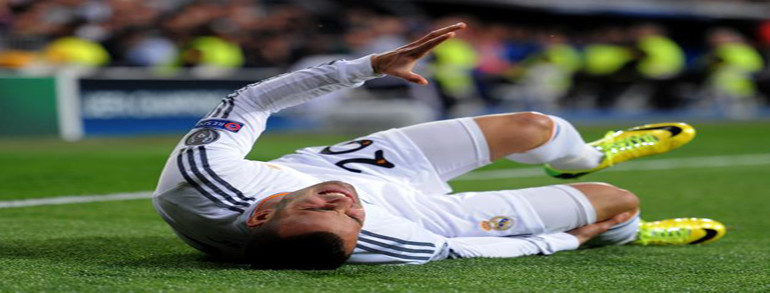
Knee injuries are very common in soccer, especially those affecting the ligaments in the knee. All players are at risk due to the frequent direction changes and the abrupt starting and stopping during game play. The largest joint in the body is the knee and it is comprised of cartilage, tendons, bones and ligaments. The femur, patella, tibia and fibula come together to make the joints that make up the knee and to prevent bone rubbing on bone as the joint moves, there is the articular cartilage and meniscus. The meniscus stabilizes the joint and provides a cushion between the two larger bones. The ligaments hold the bones together and the bones are attached to the muscles through the tendons.
Common Knee Injuries in Soccer and Their Symptoms

The knee is a strong joint, but it is also very vulnerable due to the sheer numbers of structures that comprise it. The bad thing about knee injuries is that they can be far more severe than they initially seem. The symptoms can help to determine what the injury is so that both acute and long-term treatment can be promptly administered. It is important that all soccer players have any knee issues evaluated to try and prevent the more severe issues.

Treating Knee Injuries
As soon as the knee injury occurs, you must start basic first aid to protect it from further injury. Immediately stop playing and get off of the field to an area where you can rest. Use a compression bandage to wrap the injured knee and then elevate it. Apply ice to the area and do not put any weight on the knee unless trained personnel say that you can.
All knee injuries must be evaluated by a physician or trainer to see exactly what the injury is and how severe it is. With minor injuries, continuing with basic first aid and protected weight bearing is generally enough to have a full recovery.
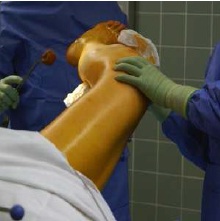
However, more severe injuries, such as tendon and ligament tears, may require surgery and almost always require significant time away from practice and games. After surgery you may not be allowed to put weight on the knee for several weeks to allow for healing. After you are healed, you will undergo physical therapy to restore strength and range of motion to the knee.
When it comes to a fracture or unstable kneecap, splinting the knee and not applying weight are usually adequate to allow for healing but you should always have the injury evaluated by trained individuals. If the instability or fracture are severe, you may need to have surgery. During surgery, the bones are put back into their normal place with the use of hardware. Your knee is splinted and you must use crutches for several weeks. After the bones have healed, physical therapy is necessary to restore range of motion and strength.
Recent Comments